

Cart
0
Understanding Hair Fall: Why the Right Shampoo Matters
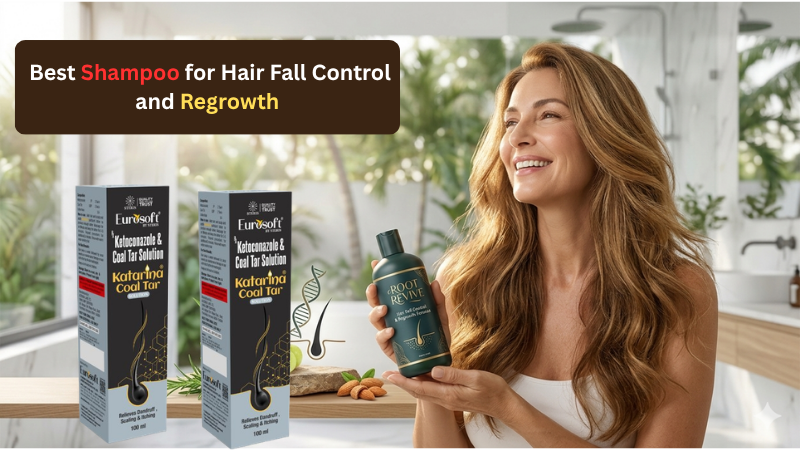
For hair fall control and regrowth, choose a shampoo containing caffeine, peptides, biotin, ketoconazole, or rosemary extract. These ingredients help reduce hair breakage, strengthen hair follicles, improve scalp health, and support healthy hair growth when used consistently as part of a complete hair care routine. For visible regrowth, pair a medicated shampoo with a minoxidil-based topical serum and consult a dermatologist if hair loss exceeds 100 strands per day.
The best shampoos for hair fall control contain one or more of these clinically validated actives: Ketoconazole (anti-DHT, anti-fungal), Caffeine (follicle stimulation), Biotin (keratin strengthening), or Saw Palmetto (natural DHT blocker).
Hair fall — medically termed telogen effluvium or androgenetic alopecia depending on the cause — affects over 60% of Indian adults before the age of 40, according to data published in the Indian Journal of Dermatology. While shampoo alone is not a cure, using the right formulation can significantly reduce daily shedding, create a healthier scalp environment, and, in some cases, support follicle reactivation.
The core challenge: not every hair fall shampoo on the market delivers what it promises. Knowing which ingredients to look for — and which claims to treat with scepticism — is critical before spending money on a product.
Key Ingredients That Actually Work for Hair Fall Control
1. Ketoconazole
Ketoconazole is the gold standard for dandruff-related and DHT-triggered hair fall. A 1998 study published in the Journal of Dermatological Treatment found that Ketoconazole 2% shampoo reduced hair loss comparably to 2% minoxidil. It works by inhibiting 5-alpha reductase, the enzyme that converts testosterone to DHT — the hormone primarily responsible for pattern baldness.
-
Best for: Seborrheic dermatitis, dandruff-linked hair fall, androgenetic alopecia
-
Recommended use: 2–3 times per week, leave on for 3–5 minutes before rinsing
2. Caffeine
Caffeine penetrates the hair follicle and counteracts the inhibitory effects of DHT on hair growth. Research from the British Journal of Dermatology demonstrated that caffeine-enriched shampoos can prolong the anagen (growth) phase of the hair cycle. Many OTC formulations now combine caffeine with biotin for a dual-action approach.
-
Best for: Stress-induced hair fall, early-stage thinning
-
Available in: Alpecin Caffeine Shampoo, several Ayurvedic + caffeine hybrid formulas
3. Biotin (Vitamin B7) & Keratin Complex
Biotin deficiency is directly linked to brittle, thinning hair. Biotin-enriched shampoos strengthen the keratin infrastructure of the hair shaft, reducing breakage. While biotin shampoos don't penetrate the scalp deeply enough to influence follicle biology on their own, they are highly effective when combined with systemic biotin supplementation.
4. Saw Palmetto Extract
A natural alternative to synthetic DHT blockers, Saw Palmetto inhibits 5-alpha reductase without the hormonal side effects associated with pharmaceutical options. A 2020 randomised study in the Journal of Alternative and Complementary Medicine reported 60% of participants using Saw Palmetto showed an improvement in overall hair count after 24 weeks.
5. Zinc Pyrithione & Salicylic Acid
These two ingredients primarily target scalp health — reducing dandruff, excess sebum, and follicle-blocking buildup. A clean, unclogged scalp is fundamental to hair regrowth; even the best topical treatment fails if the follicle opening is blocked by dead skin or fungal overgrowth.
Ingredient Comparison: Which Shampoo Type Is Right for You?
|
Ingredient |
Primary Action |
Best For |
Regrowth Support |
Suitable Skin Type |
|---|---|---|---|---|
|
Ketoconazole |
Anti-fungal, anti-DHT |
Dandruff + hair fall |
Moderate |
Oily / Sensitive |
|
Minoxidil (topical) |
Vasodilator |
Pattern baldness |
High |
All types |
|
Biotin-enriched |
Keratin synthesis |
Thin, brittle hair |
Moderate |
Dry / Normal |
|
Caffeine |
Stimulates follicles |
Stress-related fall |
Moderate-High |
All types |
|
Tea Tree + Neem |
Scalp detox |
Dandruff + itching |
Low-Moderate |
Oily / Combination |
|
Argan Oil + Keratin |
Strengthens shaft |
Breakage / Damage |
Low |
Dry / Chemically treated |
Note: This table is for informational purposes. Consult a board-certified dermatologist or trichologist for personalised product recommendations.
How to Use Anti-Hair Fall Shampoo Correctly
Even a clinically formulated shampoo delivers suboptimal results if used incorrectly. Follow these evidence-based application steps:
-
Wet hair thoroughly with lukewarm — not hot — water. Hot water strips natural scalp oils and weakens the hair shaft.
-
Apply a coin-sized amount and massage gently using fingertip pads, not nails, in circular motions for 60–90 seconds.
-
For medicated shampoos (ketoconazole, zinc pyrithione), leave on for 3–5 minutes to allow active ingredients to penetrate the scalp.
-
Rinse completely. Product residue can irritate the scalp and worsen hair fall.
-
Follow with a sulphate-free conditioner applied only from mid-shaft to ends — never on the scalp.
When Shampoo Alone Is Not Enough
Shampoo addresses the scalp environment and can reduce shedding — but it cannot reverse significant miniaturisation of hair follicles on its own. If you are experiencing:
-
Visible scalp showing through the hairline or crown
-
Hair fall exceeding 100–150 strands per day consistently
-
Patchy hair loss or sudden bald spots
-
Hair fall accompanied by fatigue, weight change, or hormonal symptoms
it is essential to consult a board-certified dermatologist or trichologist. They may recommend combining medicated shampoo with Minoxidil topical solution (5%), Finasteride (for men), PRP therapy, or nutritional interventions based on blood panel results.
Frequently Asked Questions (FAQ):
Q1: Which shampoo ingredient is clinically proven to reduce hair fall?
A: Ketoconazole and Minoxidil are the two most clinically validated ingredients. Ketoconazole inhibits DHT at the scalp level, reducing androgenetic hair loss by up to 17% in controlled trials.
Q2: Can a shampoo alone regrow hair?
A: Shampoos with activities like minoxidil, caffeine, or peptide complexes can improve follicle environment and slow hair loss. However, meaningful regrowth typically requires combining medicated shampoos with topical serums or dermatologist-prescribed treatments.
Q3: How long does it take for an anti-hair fall shampoo to show results?
A: Most dermatologists recommend consistent use for a minimum of 8–12 weeks before evaluating results, since the anagen (growth) phase of hair follicles cycles over 3–6 months.
Q4: Is it safe to use medicated anti-hair fall shampoo daily?
A: Shampoos containing ketoconazole or zinc pyrithione are generally recommended 2–3 times per week, not daily, to prevent stripping natural scalp oils. Mild herbal or caffeine-based shampoos can be used more frequently.
Q5: सबसे अच्छा एंटी-हेयर फॉल शैम्पू किसे माना जाता है?
A: Ketoconazole 2% युक्त मेडिकेटेड शैम्पू, जैसे कि Nizoral, डर्मेटोलॉजिस्ट द्वारा सबसे अधिक सुझाए जाते हैं। Biotin, Argan Oil और Caffeine युक्त शैम्पू भी बाल झड़ने की समस्या में प्रभावी होते हैं।


