

Cart
0
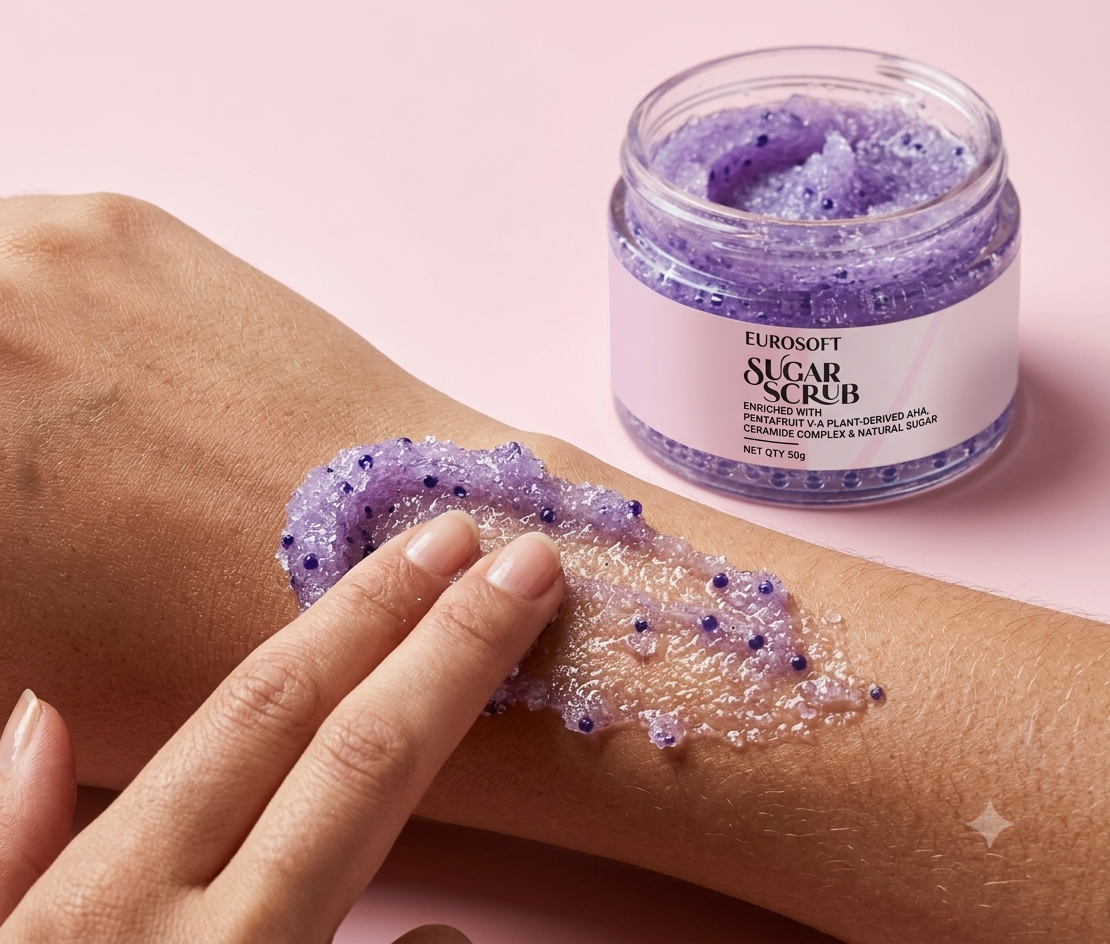
A sugar scrub is a skincare exfoliant made from granulated sugar suspended in an oil, gel, or butter base. It removes dead skin cells through gentle physical friction while the base ingredients moisturize the skin. Used 2–3 times a week on damp skin, it leaves the body smoother, more even in texture, and better able to absorb lotion afterward.
What Is a Sugar Scrub?
A sugar scrub is a body or facial exfoliant that uses sucrose (sugar) crystals as its abrasive ingredient, combined with a moisturizing base such as oil, glycerin, or butter. As the granules are massaged onto damp skin, they physically loosen and remove dead skin cells from the surface, while the surrounding formula hydrates and softens the skin at the same time.
Sugar is favored over other exfoliating agents like salt or crushed shells because it dissolves in water and has naturally rounder edges, making it less abrasive on the skin. Some modern formulas — such as Eurosoft Sugar Scrub — combine sugar with plant-derived AHAs (alpha hydroxy acids) and ceramides, adding a layer of chemical exfoliation and barrier repair alongside the traditional physical scrub.
What Does a Sugar Scrub Do for the Skin?
A sugar scrub removes built-up dead skin cells, smooths rough texture, and helps other skincare products absorb more effectively. It can also reduce the appearance of ingrown hairs and support a more even skin tone with regular use.
The specific benefits include:
- Smoother texture. Removing dead skin reveals softer skin underneath almost immediately.
- Improved product absorption. Lotions and oils sink in more effectively once surface buildup is cleared.
- More even tone. Rough, flaky patches often appear darker; consistent exfoliation helps even things out.
- Fewer ingrown hairs. Clearing dead skin around hair follicles reduces the chance of hair becoming trapped beneath the surface.
- A relaxing self-care ritual. The scent, texture, and massaging motion make it one of the easiest wellness habits to keep up with.
- Deeper renewal, with the right formula. Scrubs enriched with AHAs (like fruit-acid complexes) work below the surface, not just on it, encouraging more even cell turnover over time.
Why This Sugar Scrub Does More Than Just Scrub
If you've ever used a sugar scrub, you know the drill: it feels amazing for about ninety seconds in the shower, then you towel off and forget about it. This one's different — and it comes down to what's actually in the jar.
Most sugar scrubs stop at "sugar plus oil." This formula goes further, combining three types of exfoliation and skin support in a single step: physical exfoliation from real sugar, chemical exfoliation from a fruit-acid blend, and barrier repair from ceramides. Here's what that means for your skin.
1. Real Sugar for Gentle Physical Exfoliation
At the core of this scrub is sucrose (sugar powder), working alongside hydrated silica — a naturally derived mineral that adds a light, polishing texture. Together they buff away dry, flaky skin and rough patches without the harsh scratchiness you get from walnut shells or overly coarse salt scrubs. It's exfoliation that feels good, not like sandpaper.
2. A Fruit-Acid Complex That Does the Deeper Work
This is where the formula stands out. It includes a five-fruit acid complex — a blend of lactic acid, glycolic acid, and extracts from bilberry, sugarcane, orange, lemon, and sugar maple. These are AHAs (alpha hydroxy acids), the same category of ingredient found in professional resurfacing treatments.
While the sugar is polishing the surface, the fruit acids are working a layer deeper, helping to loosen the "glue" between dull, dead skin cells so they shed more easily. The result is a smoother, more even-toned look that a purely physical scrub can't achieve on its own.
3. Ceramides to Protect What You Just Uncovered
Exfoliation without follow-up care can leave skin feeling stripped or reactive — so this formula builds the repair step right in. A ceramide complex, alongside glycerin, helps replenish the skin's natural barrier and lock in moisture while you scrub. Ceramides are the lipids your skin already relies on to stay hydrated and resilient, so replacing them as you exfoliate means you walk away smooth and soft, not tight or sensitive.
Can You Use a Sugar Scrub on Your Face?
Yes, but only if the formula is specifically fine-grained and gentle enough for facial skin. Facial skin is thinner and more sensitive than the skin on the body, so a coarse, oil-heavy body scrub can cause irritation or micro-tears if used on the face.
Before using any sugar scrub on facial skin, check for these three things:
- Fine, not coarse, sugar granules
- No added fragrance or harsh alcohols that could irritate sensitive facial skin
- Light usage — once or twice a week, never daily
If a product doesn't clearly indicate it's gentle enough for the face, the safer choice is to reserve it for body use — arms, legs, back — and choose a dedicated facial exfoliant instead. Always avoid the eye area regardless of the formula.
How Do You Use a Sugar Scrub? (Step-by-Step)
- Wet your skin first. Apply the scrub to damp skin, ideally in the shower after a minute under warm water. This helps the sugar dissolve gradually instead of dragging harshly across dry skin.
- Massage in small, circular motions. Use light pressure — let the sugar do the exfoliating rather than pressing hard.
- Let it sit briefly. Leaving the scrub on for about a minute gives any active ingredients, like fruit acids, time to work.
- Rinse with warm water. Avoid hot water, which can be drying.
- Pat dry and moisturize immediately. Applying moisturizer while skin is still slightly damp locks in hydration and extends the smoothing effect.
How Often Should You Use a Sugar Scrub?
Most skin types do best with a sugar scrub 2 to 3 times per week. Sensitive skin should start at once a week and increase gradually based on how the skin responds. Using a sugar scrub daily can lead to irritation, redness, or a compromised moisture barrier, while under-exfoliating (less than once a week) means the skin won't see the full benefit of smoother, more even texture.
Sugar Scrub vs. Other Exfoliants
| Exfoliant | Texture | Best For | Note |
|---|---|---|---|
| Sugar scrub | Fine to medium, dissolves in water | Most skin types, body and select face use | Gentler than salt due to rounded granules |
| Salt scrub | Coarse, doesn't dissolve as easily | Tougher areas (feet, elbows) | Too abrasive for facial skin |
| Dry brushing | Firm bristles, used dry | Circulation + light exfoliation | No moisturizing benefit on its own |
| Chemical exfoliants (AHA/BHA) | No physical texture | Sensitive or reactive skin | Works below the surface only |
| Exfoliating gloves/mitts | Textured fabric | Budget-friendly manual exfoliation | Requires separate cleanser or oil |
A sugar scrub sits in the middle of this spectrum — gentler than salt, more moisturizing than dry brushing or gloves, and (in formulas that include AHAs) able to combine physical and chemical exfoliation in one step.
Best Areas of the Body for a Sugar Scrub
A sugar scrub can be used almost anywhere below the neck, but it performs best on:
- Elbows and knees — naturally rough, dry areas
- Legs — helps prevent ingrown hairs and preps skin for shaving
- Heels and feet — softens calluses, especially useful seasonally
- Arms and shoulders — helps with rough, bumpy texture (keratosis pilaris)
- Back and chest — manages texture and clogged pores in hard-to-reach areas
Common Mistakes That Reduce a Sugar Scrub's Effectiveness
- Scrubbing too hard. Pressure doesn't speed up results — it increases irritation risk.
- Using it on broken, sunburned, or freshly shaved skin. Wait until the skin has fully healed.
- Skipping moisturizer afterward. Exfoliation removes dead skin but doesn't add hydration on its own.
- Using a body formula on the face without checking ingredients. Not every sugar scrub is fine-grained enough for facial skin.
- Exfoliating daily. Even gentle formulas can cause irritation with overuse.
- Applying to bone-dry skin. Skipping the damp-skin step makes exfoliation feel harsher and less even.
- Storing the jar somewhere wet. Water exposure between uses can affect the texture and shelf life of oil-based formulas; always reseal the lid fully after use.
What to Look for When Choosing a Sugar Scrub
Not every sugar scrub on the shelf is formulated the same way, and a few quick checks can help identify a well-made product:
- Granule size relative to intended use — finer for the face, medium-to-coarse fine for the body
- A moisturizing base, such as oils, glycerin, or butters, rather than sugar suspended in something drying like plain alcohol
- Added actives, such as AHAs or ceramides, if deeper exfoliation or barrier support is a priority
- Minimal or skin-friendly fragrance, particularly for anyone with sensitive skin
- Packaging that keeps water out between uses, since water contamination can affect both texture and shelf life
Sugar Scrub by Skin Type
Dry skin: Benefits most from exfoliation, since removing flaky skin helps moisturizer absorb better. Look for formulas with glycerin or ceramides.
Oily or combination skin: Helps manage buildup on areas prone to clogged pores, like the chest or back, but shouldn't be overused, since stripping too much oil can trigger increased oil production.
Sensitive skin: Choose fine-grain, low-fragrance formulas and start with once-weekly use.
Mature skin: Cell turnover naturally slows with age, so a sugar scrub with added AHAs can support smoother, more even texture without being overly harsh.
Why the Ingredients in a Sugar Scrub Matter
Not every sugar scrub is built the same way, and the supporting ingredients around the sugar itself are often what separate an average product from an effective one.
Sucrose (sugar): The physical exfoliant. Rounder and more water-soluble than salt, making it gentler on skin.
Hydrated silica: A naturally derived mineral sometimes added alongside sugar to fine-tune texture, giving a smoother polish without harsh scratchiness.
Glycerin: A humectant that draws moisture into the skin, helping offset any dryness caused by exfoliation.
Alpha hydroxy acids (AHAs): Ingredients like lactic acid and glycolic acid, often sourced from fruit extracts, work below the surface to loosen the bonds between dead skin cells. When included in a scrub, they add a layer of chemical exfoliation on top of the physical action of the sugar.
Ceramides: Lipids that occur naturally in skin and help maintain its protective barrier. Added to a scrub, they help offset moisture loss during exfoliation, which is part of why some formulas feel soft rather than tight afterward.
Reading the ingredient list on a sugar scrub — not just relying on the marketing on the front of the jar — is the most reliable way to know whether a formula will genuinely benefit your skin type or simply feel nice for a few minutes in the shower.
Building a Sugar Scrub Into a Weekly Routine
Consistency matters more than any single use. A few ways people successfully build a sugar scrub into a regular routine:
- Anchor it to a specific day, such as a Sunday reset shower, so it's easy to remember
- Pair it with hair removal, using it the night before shaving or waxing to reduce ingrown hairs
- Use it before self-tanning, since even skin texture helps tanner apply more evenly
- Keep the jar visible in the shower as a simple visual reminder
Treating a sugar scrub as a scheduled step, rather than an occasional treat, is typically what determines whether someone sees a lasting difference in skin texture over time.
Featured Formula: Eurosoft Sugar Scrub
Eurosoft Sugar Scrub, by Eurosoft By Steris, combines three layers of benefit in a single 50g (1.76 oz) jar:
- Sucrose and hydrated silica for physical exfoliation
- Pentafruit V-A, a plant-derived AHA complex (lactic acid, glycolic acid, and extracts of bilberry, sugarcane, orange, lemon, and sugar maple) for deeper chemical exfoliation
- Ceramide Complex CLR™ and glycerin to support the skin's moisture barrier while exfoliating
This combination means the formula does more than a traditional sugar-and-oil scrub — it exfoliates on two levels while helping protect the skin barrier at the same time.
Frequently Asked Questions
Is a sugar scrub better than a salt scrub? Sugar scrubs are generally gentler than salt scrubs because sugar granules dissolve in water and have smoother edges. Salt scrubs are coarser and better suited to tougher areas like the feet.
Can sensitive skin use a sugar scrub? Yes, with a fine-grain, low-fragrance formula, starting at once-weekly use and adjusting based on how the skin responds.
Should you exfoliate before or after shaving? Exfoliating a day before shaving, rather than immediately before, tends to work best, clearing dead skin without leaving freshly shaved skin more vulnerable to irritation.
How long does one jar of sugar scrub last? A 50g jar used 2–3 times weekly typically lasts several weeks to a couple of months, depending on how much product is used per application.
Can a sugar scrub help with keratosis pilaris (skin bumps)? Regular, gentle exfoliation can improve the appearance of keratosis pilaris over time by clearing dead skin around hair follicles, though results vary by individual.
Is it safe to use a sugar scrub every day? No — daily use is generally too frequent for most skin types and can cause irritation or a compromised moisture barrier. 2–3 times per week is recommended.
What's the difference between a sugar scrub and a body wash with exfoliating beads? A sugar scrub uses sugar as the primary exfoliant in a concentrated, leave-on-for-a-moment format, while exfoliating body washes use smaller synthetic beads in a rinse-quickly cleanser, generally providing lighter exfoliation.
Summary
A sugar scrub works by physically removing dead skin cells while moisturizing ingredients in its base condition the skin underneath. Used 2–3 times a week on damp skin, followed by a moisturizer, it improves texture, evens out tone, and helps other products absorb more effectively. Formulas that combine sugar with plant-derived AHAs and ceramides — like Eurosoft Sugar Scrub — add deeper exfoliation and barrier support on top of the classic physical scrub.
Whether the goal is smoother elbows and heels, fewer ingrown hairs, or simply a more effective moisturizing routine, a sugar scrub remains one of the most accessible and well-studied exfoliation methods available — as long as it's matched to the right skin type and used with a consistent, gentle technique.
Recent Post


