

Cart
0
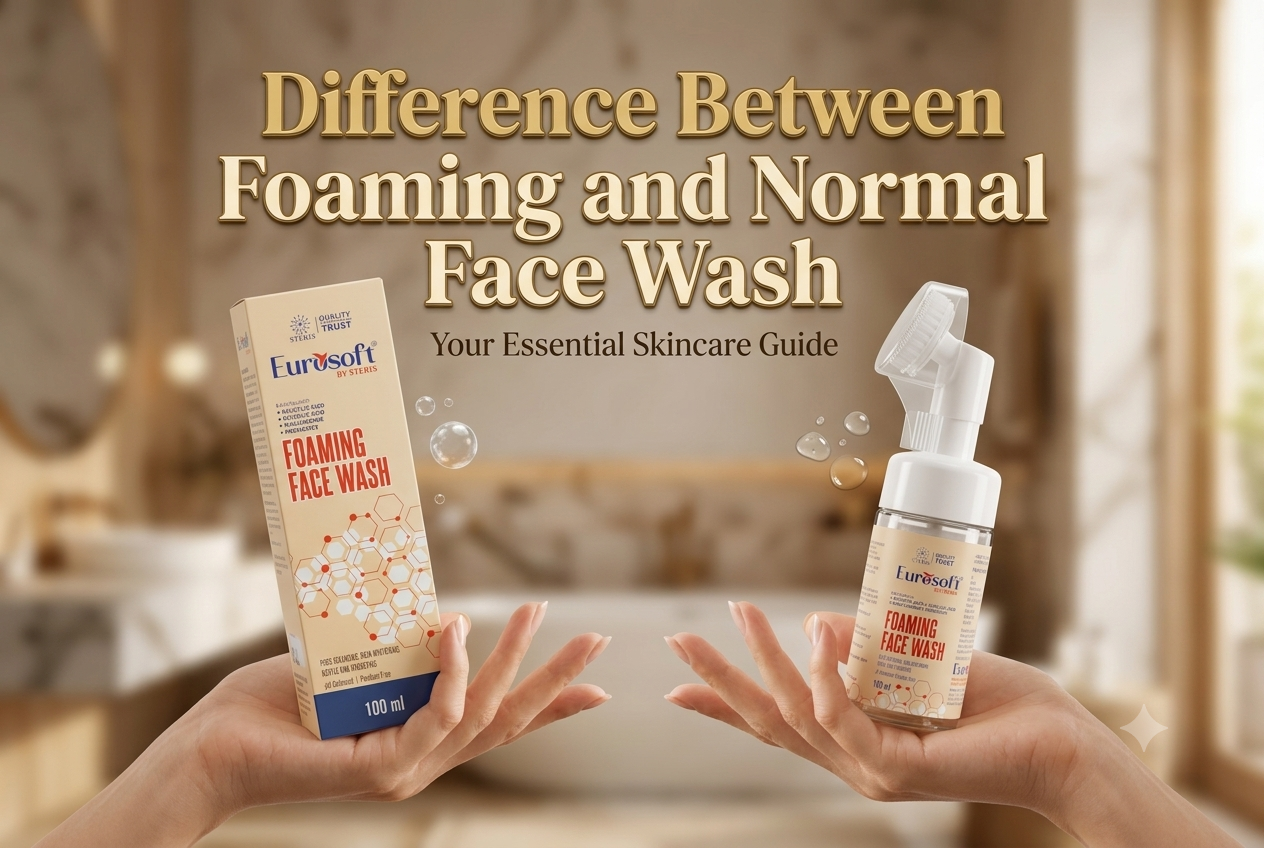
Foaming face washes create lather through surfactants and are ideal for oily, combination, and acne-prone skin — they cut through excess sebum efficiently and provide a deep-clean feel. Normal (non-foaming) face washes use milder formulations in cream, lotion, or gel textures and are better suited for dry, sensitive, or skin-barrier-compromised skin — they cleanse without stripping essential lipids. According to the American Academy of Dermatology (AAD, 2024), the single most important rule in choosing a cleanser is matching it to your skin type to preserve the skin's natural moisture barrier and avoid long-term barrier damage.
If you have been switching between face washes without seeing real results, it is time to make a smarter choice. Eurosoft Foaming Face Wash by Steris Eurosoft is dermatologist-friendly, crafted specifically for Indian skin — designed to cut through excess oil, unclog pores, and leave your face feeling genuinely clean without that tight, stripped feeling that harsh cleansers leave behind. Order Eurosoft Foaming Face Wash by Steris Eurosoft today — genuine product, best price, and fast delivery across India. Your skin will feel the difference from the very first wash.
Unlike ordinary foaming washes loaded with sulfates and synthetic fragrance, Eurosoft is formulated with skin-safe ingredients that cleanse deeply while respecting your skin barrier — so you get the deep-clean benefits of a foaming cleanser without the dryness that usually comes with it.
A foaming face wash is a surfactant-based cleanser that activates into lather when mixed with water, deeply removing excess oil, dirt, and impurities from pores — making it best suited for oily, combination, and acne-prone skin. A normal (non-foaming) face wash is a cream, gel, or lotion cleanser that removes surface impurities gently without producing lather, preserving the skin's natural lipid barrier — making it ideal for dry, sensitive, and mature skin.
What Is a Foaming Face Wash?
A foaming face wash is a water-activated cleanser that begins as a liquid, gel, or pump-dispensed solution and transforms into foam or lather when massaged onto wet skin. This lathering action is produced by ingredients called surfactants — surface-active agents that have a unique molecular structure with one end that binds to water and another that binds to oil. When you rub a foaming cleanser between wet palms or onto wet skin, these surfactant molecules grab onto skin oils, dirt, and environmental pollutants and suspend them in the foam — allowing them to be rinsed away completely with water.
According to CeraVe's dermatologist-reviewed skincare guide (updated May 2026), foaming face washes begin as a gel or cream and transition into foam upon contact with water. They typically deliver different levels of lather, from mild bubbling to a full-on foaming texture — and not all foaming cleansers are equally aggressive. The foam intensity depends directly on the type and concentration of surfactants used.
The most common surfactants found in foaming cleansers are sodium lauryl sulfate (SLS) and sodium laureth sulfate (SLES) — powerful anionic surfactants that create rich, satisfying lather but are also the most likely to strip the skin's natural lipids if used excessively. Gentler alternatives like cocamidopropyl betaine, sodium cocoyl isethionate, and amino acid-based surfactants are increasingly used in modern foaming formulas to deliver effective cleansing without compromising the skin barrier.
What Is the Cost of Eurosoft Foaming Face Wash?
Eurosoft Foaming Face Wash by Steris Eurosoft is priced affordably, making it one of the most value-for-money dermatologist-friendly cleansers available in India today. The exact price may vary slightly depending on the pack size and the platform you purchase it from — whether directly through the Steris Eurosoft official website, a registered pharmacy, or an authorised online retailer.
For the most accurate and up-to-date pricing, visiting the official Steris Eurosoft website or contacting their authorised distributor directly is always the most reliable option — ensuring you get the genuine product at the correct market price without any risk of counterfeit or overpriced alternatives.
What Is a Normal (Non-Foaming) Face Wash?
A normal face wash — also called a non-foaming cleanser — is any facial cleanser that does not produce significant lather when used. This broad category includes cream cleansers, milk cleansers, lotion cleansers, micellar water formulations, cleansing oils, and even many gel cleansers that rinse clean without lathering.
As noted in the Healing Pharma dermatology review (February 2025), normal face washes are designed to remove dirt, oil, makeup, and impurities without stripping the skin of its natural moisture. Their formulations typically include humectants like glycerin and hyaluronic acid, emollients like ceramides and fatty acids, and gentle non-ionic or amphoteric surfactants at lower concentrations — all of which work together to cleanse the skin while actively replenishing its protective lipid barrier rather than degrading it.
The cleansing mechanism in non-foaming washes is subtler — rather than lifting oils into a foam, these formulations dissolve surface impurities and allow them to be wiped or rinsed away gently. The result is skin that feels soft and comfortable after washing rather than tight or stripped — a sensation many people with dry or sensitive skin immediately recognise and prefer.
The Key Differences — Foaming vs Normal Face Wash
| Feature | Foaming Face Wash | Normal (Non-Foaming) Face Wash |
|---|---|---|
| Texture | Liquid or gel → activates into foam | Cream, lotion, gel, or milk — no lather |
| Surfactant Strength | Higher — anionic or combined surfactants | Lower — mild non-ionic or amphoteric |
| Cleansing Depth | Deep — removes excess oil and unclogs pores | Gentle — removes surface impurities |
| Skin Barrier Impact | Higher risk of stripping lipids if harsh formula | Preserves and replenishes skin barrier |
| Best Skin Types | Oily, combination, acne-prone | Dry, sensitive, mature, barrier-compromised |
| Post-Wash Feel | Fresh, clean, sometimes tight | Soft, comfortable, no tightness |
| Key Active Ingredients | Salicylic acid, niacinamide, tea tree, AHAs | Ceramides, hyaluronic acid, aloe, glycerin |
| Twice-Daily Use | Fine for oily skin; may over-dry sensitive skin | Safe for twice-daily use across all skin types |
How Foaming Face Wash Affects the Skin Barrier
This is the most clinically important part of the foaming versus normal face wash conversation — and the one most skincare content gets wrong.
The skin's outermost protective layer, the stratum corneum, is made up of corneocytes (dead skin cells) held together by a lipid matrix consisting of ceramides, cholesterol, and free fatty acids. This lipid matrix is what keeps moisture locked inside the skin and keeps environmental irritants, allergens, and bacteria out. When this barrier is intact, skin looks plump, calm, and healthy. When it is disrupted, skin becomes red, flaky, tight, reactive, and more vulnerable to breakouts — even paradoxically oily ones.
As dermatologist Dr. Leslie Baumann MD explains on Skin Type Solutions, the problem with aggressively foaming cleansers is that the anionic surfactants — particularly sulfates like SLS — used to create rich lather are highly effective at removing dirt and oils, but they also strip away the natural fats that make up the skin's protective barrier. This leads to dryness, irritation, and long-term barrier damage that can worsen virtually every skin condition, from acne to eczema to rosacea.
However — and this is crucial — not all foaming cleansers damage the skin barrier. As The Good Hygiene Company's dermatologist-medically reviewed guide (Dr. Hema Sathish, MBBS, DD UK, July 2025) explains, modern foaming formulations include mildness enhancers and moisturising agents such as lipids, occlusives, and humectants that minimise damaging interactions between surfactants and the skin's natural proteins and lipids — replenishing what the surfactants remove. The difference between a skin-barrier-safe foaming cleanser and a damaging one comes down entirely to its full ingredient list — not just whether it foams.
Which Face Wash Is Right for Your Skin Type?
Oily Skin: Foaming face wash is the clear winner here. Excess sebum production in oily skin means pores are constantly loading up with oil, environmental pollution, and dead skin cells. The surfactant action of a foaming cleanser cuts through this sebum load efficiently and provides the deep-clean feeling that oily skin genuinely needs. Look for sulfate-free foaming formulas containing salicylic acid (BHA) for pore clearing, niacinamide for sebum regulation, or tea tree extract for antibacterial action.
Acne-Prone Skin: Foaming cleansers with salicylic acid (0.5–2%) are dermatologist-recommended first-line cleansers for acne-prone skin. Salicylic acid is oil-soluble, meaning it penetrates into pores rather than sitting on the surface — clearing the comedones (blocked pores) that lead to blackheads, whiteheads, and inflamed acne lesions. As noted by Skin By Dr. G (March 2024), foaming cleansers deeply cleanse pores, remove excess sebum, and help keep acne-causing bacteria in check — making them a non-negotiable step in any acne management routine.
Dry Skin: A non-foaming cream or lotion cleanser is strongly preferred. Dry skin already has a compromised lipid barrier and reduced sebum production — adding a foaming cleanser strips away what little natural oil it has left, triggering the tight, uncomfortable, sometimes flaky feeling dry-skin users know too well. A ceramide-containing or glycerin-rich non-foaming cleanser cleanses gently while actively restoring what the skin is already lacking.
Sensitive Skin: Non-foaming cleansers are the default recommendation for sensitive skin. Surfactants — especially sulfates — are among the most common triggers for reactive sensitive skin. According to Aqualogica's skincare guide (sourcing NIH data, May 2026), gel cleansers that do not foam tend to preserve the skin barrier better in skin types that feel tight, flaky, sensitive, or irritated easily. If a foaming option is preferred for personal reasons, choose formulations specifically labelled sulfate-free, fragrance-free, and alcohol-free.
Combination Skin: This skin type needs a nuanced approach. The T-zone (forehead, nose, chin) tends toward oiliness and benefits from a gentle foaming cleanser, while the cheeks and perioral areas lean dry and need barrier protection. A mild foaming cleanser — or alternating between a foaming and non-foaming cleanser on different zones — is the most practical solution. As noted by Skin By Dr. G, a foaming face wash effectively tackles the oily T-zone without being overly drying for the rest of the face when the formula is well-balanced.
Mature Skin: Non-foaming cream or milk cleansers are ideal. Mature skin produces progressively less sebum and has a naturally thinner, more fragile lipid barrier. Foaming cleansers — even gentle ones — accelerate the transepidermal water loss (TEWL) that already increases with age. A non-foaming cleanser that also contains anti-ageing actives like peptides, hyaluronic acid, or vitamin C provides cleansing alongside active skin support.
Key Ingredients to Look For and Avoid
In Foaming Face Washes — Look For:
- Salicylic acid (0.5–2%) — pore-clearing BHA for acne and oily skin
- Niacinamide — sebum regulation and skin-barrier support
- Tea tree extract — antibacterial without harshness
- Amino acid-based surfactants — gentler than sulfates
- Aloe vera — calming and anti-inflammatory
In Foaming Face Washes — Avoid:
- Sodium lauryl sulfate (SLS) — most aggressive barrier-stripping surfactant
- Alcohol (denatured/ethanol) — excessively drying, especially in Indian humid climates
- Synthetic fragrance — common irritant, especially for sensitive and acne-prone skin
In Normal Face Washes — Look For:
- Ceramides (1, 3, 6-II) — restore the skin's lipid barrier
- Hyaluronic acid — deep hydration
- Glycerin — powerful humectant that draws moisture into the skin
- Panthenol (vitamin B5) — soothing and barrier-repairing
Frequently Asked Questions (FAQs)
Q1. What is the main difference between foaming and normal face wash?
Ans. Foaming lathers to deep-clean; normal gently cleanses without stripping.
Q2. Is foaming face wash good for dry skin?
Ans. No, it can strip moisture; use a cream cleanser instead.
Q3. Can foaming face wash damage the skin barrier?
Ans. Yes, if it contains SLS or harsh sulfate-based surfactants.
Q4. Which face wash is best for oily acne-prone skin?
Ans. Sulfate-free foaming wash with salicylic acid works best.
Q5. Can I use a foaming face wash twice daily?
Ans. Yes for oily skin; once daily is safer for sensitive skin.
Q6. Is non-foaming face wash better for sensitive skin?
Ans. Yes, it cleanses gently without triggering irritation or redness.


